
Florida Women Fought for the Ballot. Now We Must Help More Women Reclaim It. | Opinion
By Raven Lightsey, FRRC Interim Executive Director
Published on August 26, 2026
Florida Women Fought for the Ballot. Now We Must Help More Women Reclaim It.| Opinion
By Raven Lightsey, FRRC Interim Executive Director
Published on August 26, 2026
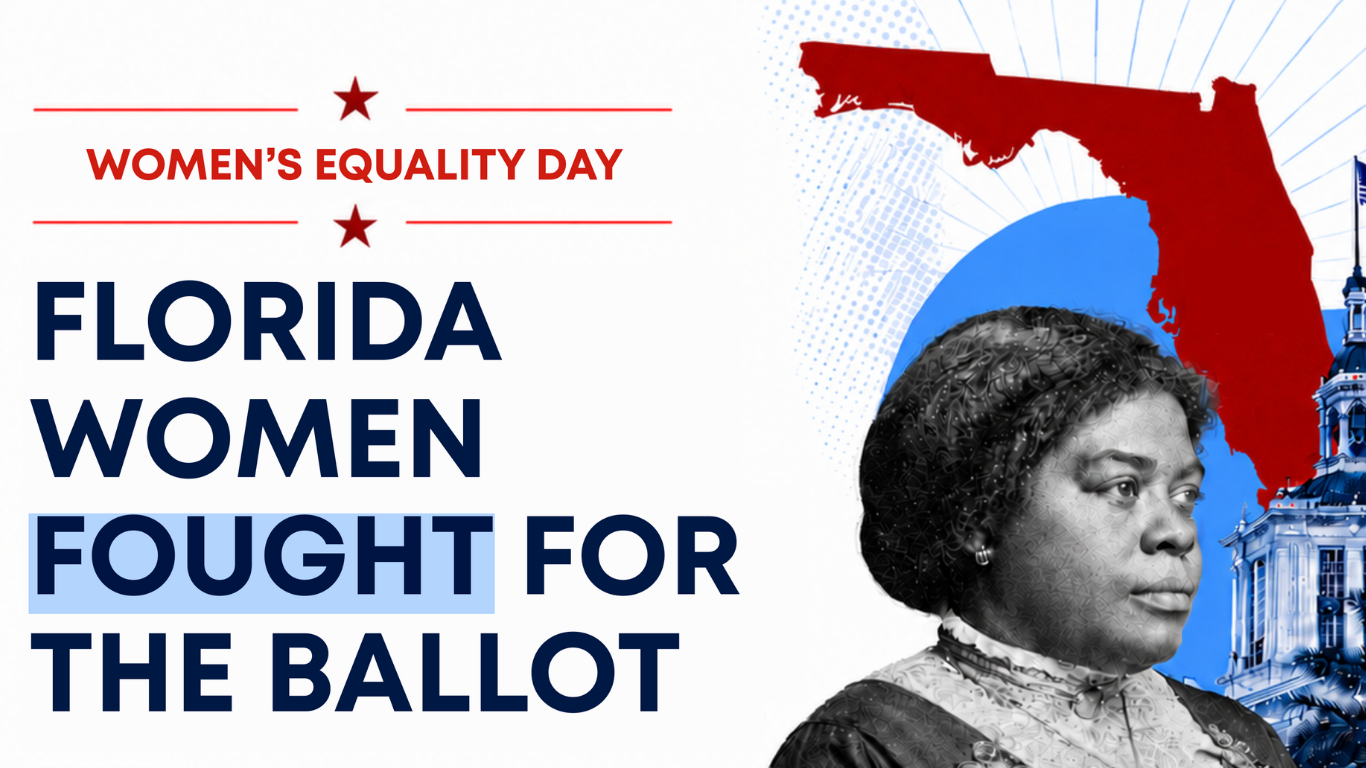
Florida has its own remarkable history of women who fought to make that promise real.
May Mann Jennings advocated for women’s suffrage before the 19th Amendment became law. Eartha M.M. White worked through women’s organizations to educate and organize Black Floridians to vote. Mary McLeod Bethune helped Black women in Daytona Beach register to vote despite racial intimidation and threats from the Ku Klux Klan.
Their work reminds us that winning a right on paper is not always the end of the fight. Sometimes, the next challenge is making sure people can actually exercise it.
Although Florida voters overwhelmingly approved Amendment 4 in 2018 to restore voting rights to most people with felony convictions after completion of their sentences, an estimated 1 in 38 women remain unable to vote because of a prior felony conviction in 2024.
That gives Florida the largest number of women out of any other state or territory who remain disenfranchised after completing their sentences.
These are not simply statistics. They represent mothers, daughters, sisters, coworkers, caregivers, business owners, and neighbors who are living and working in our communities.
We recently saw how complicated that system can be.
During Florida’s August primary, a returning citizen FRRC assisted had received a voter registration card earlier this year but was later verbally informed at the polls that outstanding fines and fees connected to an old conviction affected their eligibility.
We reviewed the records, confirmed that obligations remained, and followed through on our with removing the barriers that were preventing them from voting.
That experience is one example of a much larger challenge. For women trying in good faith to understand their eligibility may have to navigate court records, financial obligations, clemency decisions, and election systems that do not always provide simple answers.
Throughout our history, women have helped other women understand their rights, register to vote, and make their voices heard. We have organized through churches, neighborhoods, civic groups, workplaces, and kitchen tables. We have shared information with one another and helped our families and communities navigate systems that can otherwise feel overwhelming.
We can continue that tradition today.
We can make sure women returning from the criminal justice system know that there are places they can turn for reliable information about their rights. We can connect friends, family members, and neighbors with resources to understand their eligibility. We can talk openly about fines and fees, rights restoration, and the steps people may need to take before registering or voting. We can advocate for systems that give returning citizens clear, consistent, and timely answers.
Women helping women participate fully in our communities is not a new idea. It is part of the legacy we celebrate on Women’s Equality Day.
Our foremothers fought for our voices to be heard.
Now, we have an opportunity to help more women reclaim theirs.
If you or someone you know has questions about voting eligibility or restoring their rights after a felony conviction, reach out to the Florida Rights Restoration Coalition. FRRC is here to help returning citizens understand their options, navigate fines and fees, and take the next steps toward restoring their rights.
SHARE THE NEWS

About the Florida Rights Restoration Coalition
FRRC is a grassroots, membership organization run primarily by Returning Citizens (Formerly Convicted Persons) who are dedicated to ending the disenfranchisement and discrimination against people with convictions and creating a more comprehensive and humane reentry system that will enhance successful reentry, reduce recidivism, and increase public safety.
For interview requests or further information contact Kinyatta Wright at kinyatta@floridarrc.org, or at the phone number, 407-664-6451.